
People living with an acquired brain injury often face legal challenges that are difficult to navigate. Issues such as disability benefits, employment, housing, insurance claims, and substitute decision making can have a major impact on daily life. Yet many people with acquired brain injuries struggle to find legal support that meets their needs.
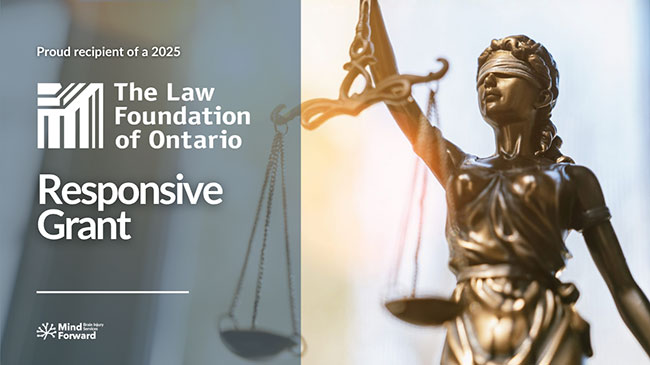
Despite these realities, there is very little research on the legal needs of people living with acquired brain injuries and few services designed specifically with this community in mind. That’s why Mind Forward is proud to announce that we have received a one year Responsive Grant from the Law Foundation of Ontario.
The Responsive program supports community led projects that improve access to justice by identifying legal gaps and helping connect people to the information and support they need. This funding will allow Mind Forward to take an important first step toward understanding where those gaps exist for the people we serve.
Over the next year, we will speak directly with clients, caregivers, staff, legal professionals, and community partners to better understand the legal issues people with acquired brain injuries experience and the barriers they face when trying to get help.
The project will include interviews and focus groups with clients, caregivers, and staff, a review of Mind Forward’s current services, and conversations with community legal clinics, Legal Aid Ontario, and paralegal training programs. Together, this work will help identify opportunities to strengthen referrals, build partnerships, and improve access to legal information.
The project will also include an opportunity for participants to help shape and test sample legal information resources designed specifically for people living with acquired brain injuries and their caregivers. These materials are for research and testing purposes and will help us better understand how legal information can be made more accessible.
At Mind Forward, we want to better understand the experiences of our clients and learn where the biggest gaps exist. The findings will guide our future planning and help us build stronger partnerships across the legal and community sectors. We also hope this project creates opportunities for future funding and collaboration so that people living with acquired brain injuries have better access to legal information, support, and services that meet their needs.
This is the beginning of an important conversation, and we’re grateful to the Law Foundation of Ontario for helping make it possible.