
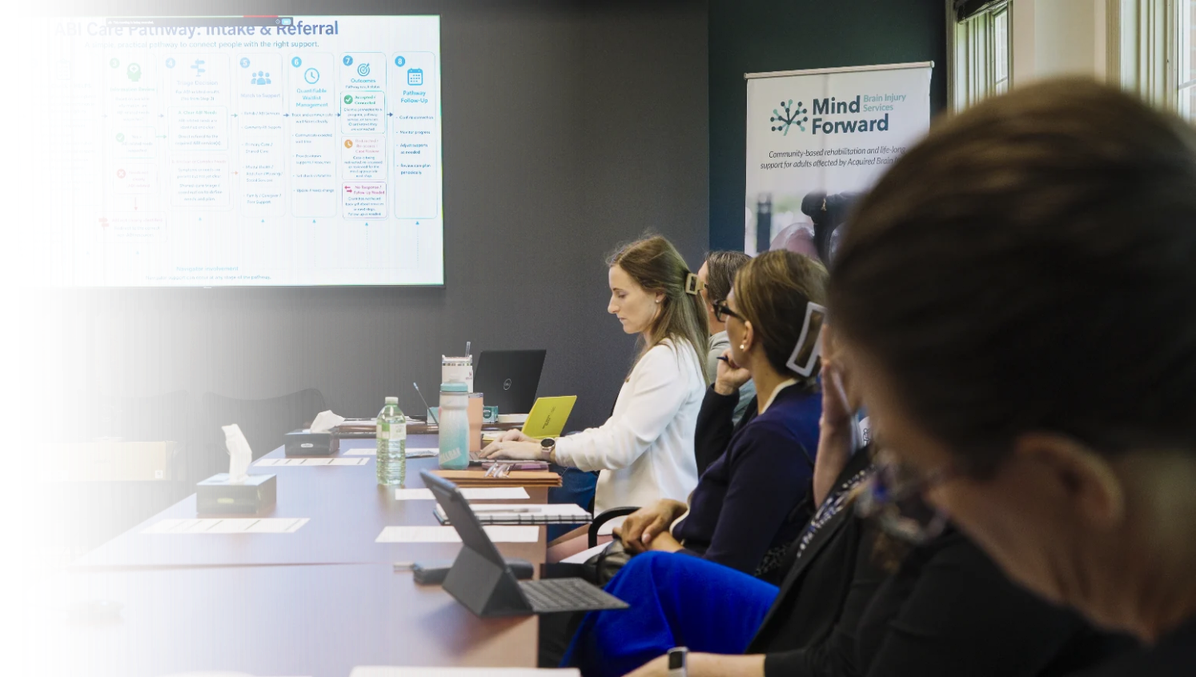
The Peel, Halton & Dufferin ABI Pathway
Connecting Brain Injury Care Across the System
The ABI Pathway brings care together so people with acquired brain injury can access the right support at the right time, through every stage of recovery.
A connected approach to care

What is the ABI Pathway?
The Acquired Brain Injury (ABI) Pathway is a coordinated, system-wide approach designed to improve how individuals move across the continuum of care, from acute care to rehabilitation and community.
The Pathway focuses on improving transitions, strengthening referrals and helping people stay connected to care and support as their needs change.

Why this matters
People should not have to navigate a fragmented system alone.
People with brain injury can face gaps between services, long waits and limited access to rehabilitation and community supports. Families and caregivers are often left to coordinate complex care.
1. Early support
Rehabilitation may be delayed
Some people do not receive rehabilitation early in their recovery.
2. Transitions
Care can feel disconnected
Moves between hospital, rehabilitation and community care can be inconsistent.
3. Families
Navigation takes a toll
Families may be left to find their way through complex services on their own.
4. Outcomes
Delays have consequences
Gaps can contribute to avoidable hospital use and poorer outcomes.
A clearer path through care
How the Pathway works
Five connected stages help organize support as a person’s needs change through recovery.

Screening & identification
Use standardized tools to identify possible brain injury early.

Acute care
Support stabilization, assessment and early discharge planning.

Rehabilitation
Connect with specialized services that support recovery and function.

Primary care
Coordinate ongoing medical and mental health support.
Community integration
Continue recovery through community supports and peer connection.
Designed to connect the pieces
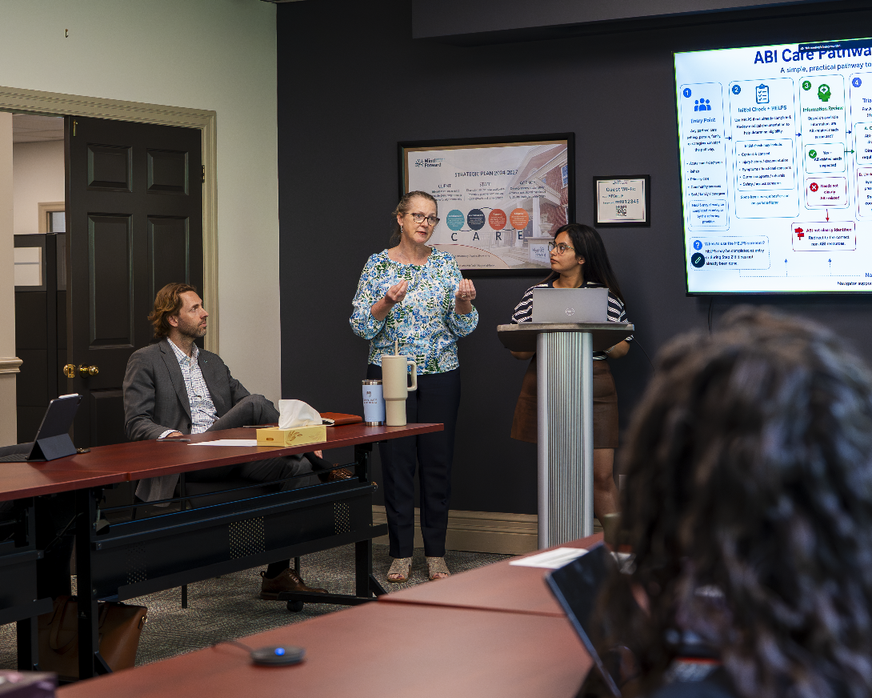
What makes the ABI Pathway different.
Shared processes and collaboration help make care easier to navigate across settings.
- Coordinated navigationDedicated support helps individuals and families move through the system.
- Standardized screeningImprove identification of brain injury and related needs.
- Shared data & accountabilityTrack progress and use what we learn to improve the pathway over time.
- Centralized referralsConnect people with the right services and reduce referral gaps.
- Cross-sector collaborationHospitals, rehabilitation, primary care, housing and community services work together.
Who the Pathway supports
Care that includes the people around each person
The ABI Pathway is designed to support people with acquired brain injury and the teams who walk alongside them.
- Individuals with acquired brain injury
- Families and caregivers
- Healthcare providers and discharge planners
- Community agencies and service providers
Built with complex needs in mind
The Pathway aims to improve connections for people facing additional barriers, including mental health challenges, housing instability or limited access to care.
Support is coordinated across settings so people can move toward the next step with clearer connections.
Built through collaboration
Partners across the continuum
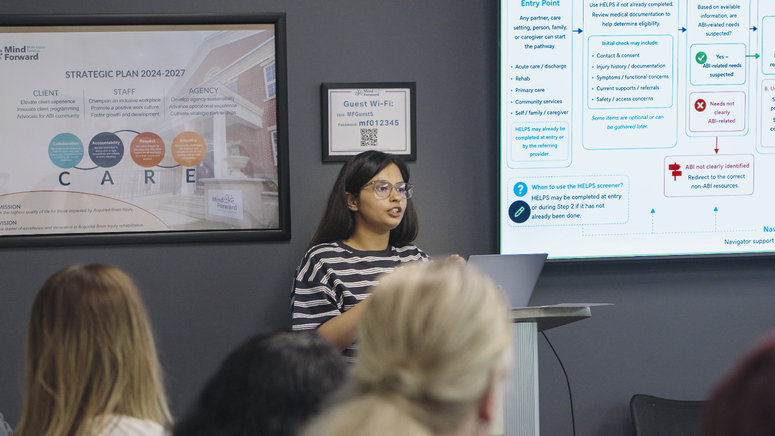
The ABI Pathway is co-developed with hospital, rehabilitation, primary care and community services, mental health and housing supports. It is being piloted in Peel, Halton and Dufferin, with a focus on practical tools, stronger referrals and smoother transitions from hospital to community care. As the Pathway develops, partners will continue to refine shared processes and identify opportunities to strengthen access and continuity of care.











A shared pathway starts with partners at the table.
Read about the inaugural Peel ABI Care Pathway meeting and the beginning of this collaborative work.
Learning and improving together
Measuring what matters
The Pathway tracks key indicators to understand where connections are working and where care can improve.
- 1Access to rehabilitation services
- 2Timeliness of referrals and follow-up
- 3Transitions between care settings
- 4Client and caregiver experience
- 5Long-term recovery outcomes
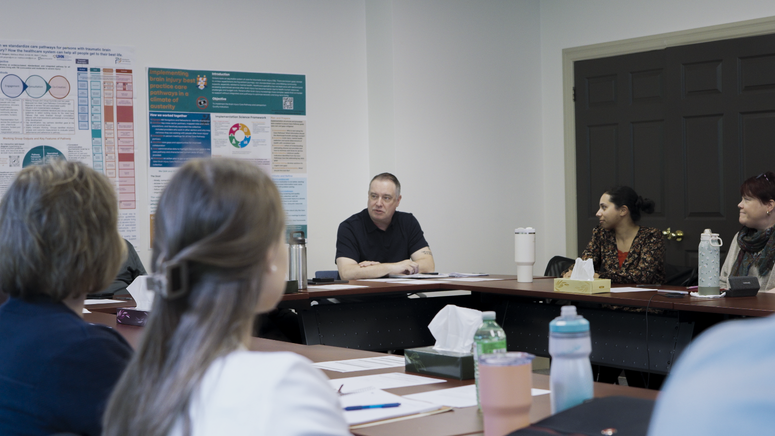
A stronger system starts together
Join the ABI Pathway
Healthcare providers, community organizations and system partners all have a role in improving care for people with brain injury. Together, we can build a more connected and responsive system.
For more information, contact [email protected].